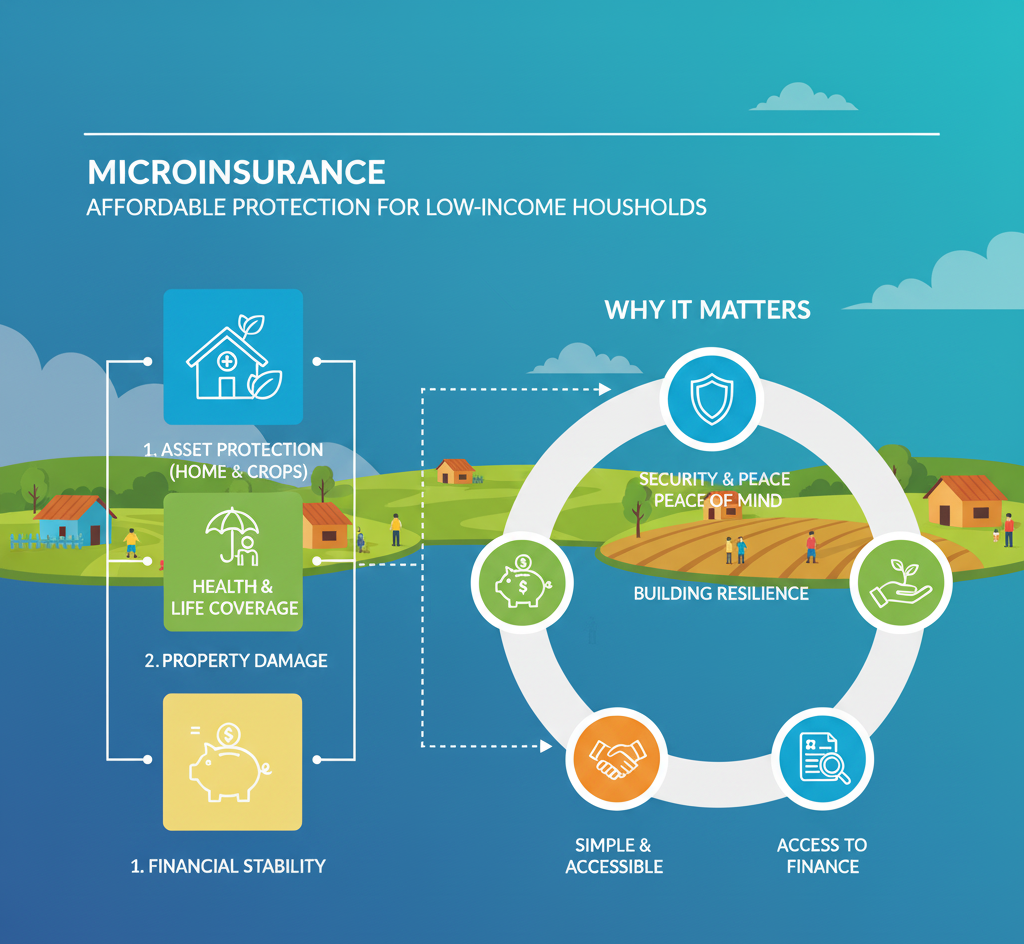
Microinsurance: Affordable Protection for Low-Income Households (2025 Guide)
Financial risks such as illness, accidents, crop failure, or natural disasters can severely impact low-income families. Traditional insurance is often too expensive or complicated for these households — which is where microinsurance becomes a game-changer.
Designed to be simple, low-cost, and accessible, microinsurance provides essential financial protection to individuals who need it the most.
This guide explains what microinsurance is, how it works, its benefits, types, and why it is becoming essential for millions of low-income households globally.
What Is Microinsurance?
Microinsurance is a type of insurance designed specifically for low-income individuals and households, offering affordable premiums, simple terms, and coverage for everyday risks.
Key Features
- Very low premiums
- Simple documentation
- Quick claim processes
- Coverage tailored to essential needs
- Accessible through community groups, NGOs, banks, or mobile platforms
Microinsurance helps protect vulnerable groups from events that could push them into deeper poverty.
Why Low-Income Households Need Microinsurance
Low-income families often face higher financial risks but lack savings to handle emergencies.
1. Protects Against Unexpected Expenses
Medical emergencies, livestock death, or crop failure can drain savings instantly.
Microinsurance offers a safety net to absorb these shocks.
2. Helps Break the Cycle of Poverty
Without insurance, families often take high-interest loans during crises.
Microinsurance helps avoid debt traps.
3. Affordable and Accessible
Premiums are designed to match low-income budgets.
Policies can be purchased through:
- Mobile money
- Microfinance institutions
- Cooperatives
- NGOs
- Community organizations
4. Encourages Financial Stability
Insurance increases confidence, enabling families to invest in education, business, or farming.
Types of Microinsurance
Microinsurance covers essential risks faced by low-income communities.
1. Micro Health Insurance
Covers basic medical treatments, hospitalization, and emergency care at an affordable cost.
Benefits
- Helps pay for hospitalization
- Covers medicines and doctor visits
- Reduces financial pressure during medical crises
2. Micro Life Insurance
Provides financial support to families in case of death of the breadwinner.
Includes
- Natural death coverage
- Accidental death benefits
This protects dependent family members from financial hardship.
3. Micro Livelihood/Income Insurance
Helps replace lost income due to accident, illness, or disability.
Ideal For
- Daily wage workers
- Small vendors
- Laborers
- Self-employed individuals
4. Micro Crop Insurance
Protects farmers from losses caused by:
- Drought
- Flood
- Pests
- Plant disease
- Storms
Why Important
Small farmers depend entirely on crops for income — one bad season can cause huge loss.
5. Micro Livestock Insurance
Covers the value of animals such as:
- Cows
- Goats
- Buffalo
- Poultry
- Sheep
Livestock is a key asset for rural households, so protection is essential.
6. Micro Property Insurance
Covers damage to small homes, shops, and personal belongings.
Protects Against
- Fire
- Flood
- Storm
- Theft
- House collapse
Low-income families often live in risk-prone areas, making this valuable.
7. Micro Accident Insurance
Provides compensation for accidental death or disability at a very low premium.
How Microinsurance Works
Microinsurance works similar to traditional insurance but with simplified processes.
How It Works
- Individuals pay a small premium.
- The insurer pools these premiums.
- When an event occurs (illness, loss, damage), the insured files a claim.
- The insurer pays a fixed benefit amount.
Microinsurance is often offered through group-based systems, reducing administrative costs.
Benefits of Microinsurance
✔️ Affordable for low-income families
✔️ Quick and transparent claim settlements
✔️ Simple documentation
✔️ Helps avoid high-interest debt
✔️ Protects livelihoods
✔️ Encourages financial planning
✔️ Supports economic stability in communities
Challenges of Microinsurance
Although microinsurance offers great benefits, there are challenges:
- Limited awareness
- Difficulty reaching remote communities
- Trust issues with insurers
- Low coverage limits
- Poor literacy affecting understanding of policies
However, mobile technology and microfinance institutions are helping solve many of these challenges.
Who Should Consider Microinsurance?
Microinsurance is ideal for:
- Low-income households
- Small farmers
- Daily wage laborers
- Street vendors
- Migrant workers
- Small shop owners
- Rural communities
Anyone with limited resources and high exposure to daily risks can benefit.
Real-Life Impact of Microinsurance
Microinsurance has helped millions of families by:
- Paying hospital expenses
- Recovering losses after floods
- Replacing income after accidents
- Protecting livestock and crops
- Supporting families after sudden death
It serves as a lifeline for those with no backup savings.
FAQs
1. What is microinsurance?
Microinsurance is low-cost insurance designed to protect low-income households from common risks like illness, crop loss, or accidents.
2. Who offers microinsurance?
Microfinance institutions, NGOs, cooperatives, and insurance companies often sell microinsurance through simple channels like mobile payments.
3. Is microinsurance cheaper than regular insurance?
Yes. Microinsurance has much lower premiums and simpler coverage.
4. What risks does microinsurance cover?
It covers health, life, crops, livestock, accidents, property, and livelihood-related risks.
5. Why is microinsurance important for poor households?
It protects families from financial shocks that can push them deeper into poverty.
Conclusion
Microinsurance is a powerful tool that ensures financial safety and stability for low-income households. By providing affordable protection against everyday risks, it helps families focus on growth instead of fear.
As awareness grows and digital platforms expand, microinsurance will continue to transform the lives of millions around the world.