How to Choose the Right General Insurance Policy for Your Needs (2025 Guide)
Choosing the right general insurance policy can feel confusing — especially with so many plans, coverage options, and hidden terms. Whether you’re buying health, auto, travel, or home insurance, selecting the right policy is crucial to ensure financial protection when you need it most.
This guide will help you understand exactly what to look for, compare policies smartly, and avoid common mistakes.
Why Choosing the Right Policy Is Important
Insurance is a safety net. The correct policy ensures:
- Proper financial coverage
- Protection from unexpected losses
- Peace of mind
- Affordable premiums
- Smooth claim settlement
A poor choice can leave you underinsured or facing unexpected expenses during emergencies.
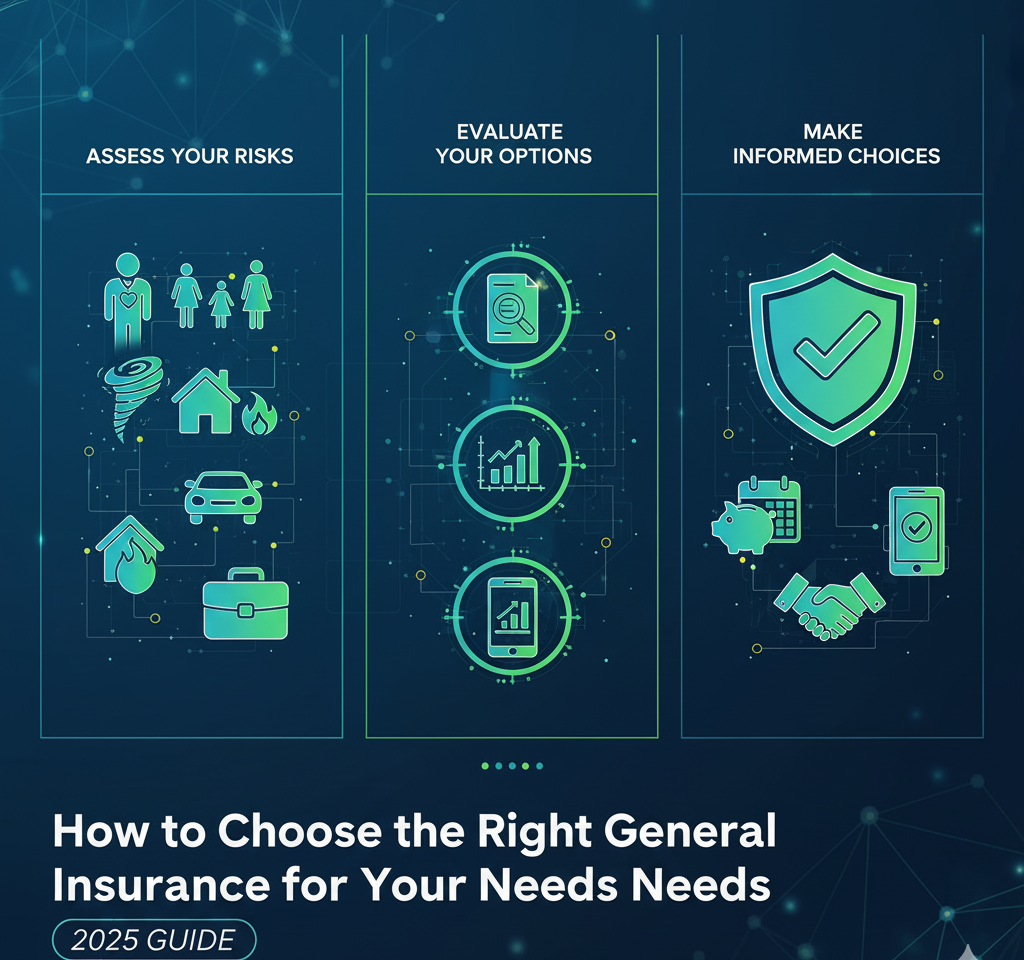
1. Identify Your Insurance Needs
Start by understanding what you want to protect. Needs differ from person to person.
Questions to Ask Yourself
- Do I want to protect health, vehicle, home, or travel?
- What risks do I face (illness, accidents, theft, natural disasters)?
- Am I buying for myself or my family?
- What is my budget?
Examples
- A family requires a health family floater plan.
- A car owner needs comprehensive motor insurance.
- Frequent travelers need travel insurance.
2. Compare Multiple Insurance Plans
Never buy the first policy you see.
Compare Based On
- Coverage amount
- Premiums
- Add-ons
- Claim settlement process
- Network hospitals/garages
- Waiting periods (for health insurance)
Use comparison tools or consult advisors if needed.
3. Understand the Coverage & Benefits
Coverage explains what the insurer will pay for.
Key Coverage Points
- Hospitalization
- Accidental damage
- Theft or loss
- Natural disasters
- Third-party liabilities
- Personal accident cover
Choose a plan that offers comprehensive protection for your specific needs.
4. Check the Exclusions
Exclusions are conditions where the insurer will not pay. Most people skip this part — leading to rejected claims later.
Common Exclusions
- Pre-existing diseases (initial waiting period)
- Intentional damage
- Driving without a license
- Unapproved modifications
- Adventure sports risks (in travel policies)
Always read the exclusions carefully before buying.
5. Choose the Right Sum Insured
Sum insured is the maximum amount the insurer will pay.
How to Determine the Right Sum Insured
- Health insurance: consider age, medical history, hospital costs in your city.
- Motor insurance: consider vehicle age, model value, repair costs.
- Home insurance: calculate building + content value.
Underinsuring may reduce premiums but will cause financial problems during claims.

6. Look at Add-ons/Riders
Add-ons give extra benefits for an affordable price.
Useful Add-ons
- Zero depreciation (motor insurance)
- Room rent waiver (health insurance)
- Critical illness cover
- Engine protection
- Travel cancellation cover
Choose add-ons based on your lifestyle and risks — not because they “sound useful”.
7. Check Claim Settlement Ratio & Reviews
A good policy is useless if claims are not paid quickly.
Look for Insurers With
- High claim settlement ratio
- Fast claim processing
- Easy documentation
- Good customer support
Reviews on forums and social media can help you evaluate customer experiences.
8. Analyze Premium vs. Coverage
Cheapest is NOT always best.
Consider These Factors
- What coverage are you getting for the premium?
- Any hidden charges?
- Renewal premium increases?
Choose value — not the lowest cost.
9. Verify Network Hospitals and Garages
For health insurance:
- More network hospitals = easier cashless treatment
For motor insurance:
- More network garages = faster repairs with no upfront payment
10. Read the Policy Document Carefully
Before purchasing, review:
- Policy wording
- Coverage limits
- Deductibles
- Waiting periods
- Co-payment clauses
This ensures you understand exactly what you are buying.
Common Mistakes to Avoid
- Choosing the cheapest plan
- Not reading exclusions
- Underestimating risks
- Ignoring add-ons
- Not checking insurer reputation
- Not renewing on time
FAQs
1. How do I know which general insurance policy is best for me?
Identify your needs first, then compare policies based on coverage, exclusions, premiums, and claim settlement ratios.
2. What is the most important factor when choosing insurance?
Coverage and claim settlement reputation are the most critical factors.
3. Should I buy the cheapest insurance policy?
No. Cheap policies often come with limited benefits and strict exclusions.
4. How much coverage should I choose?
Select coverage based on your financial situation, risks, and lifestyle.
5. Can I buy multiple general insurance policies?
Yes, you can have different policies for health, home, travel, and vehicle.
Conclusion
Choosing the right general insurance policy requires a balance of coverage, affordability, and reliability. By understanding your needs, comparing plans, checking exclusions, and evaluating insurers, you can make a smart, informed decision that protects you and your family from financial risk.
A well-chosen insurance policy is not an expense — it is an investment in peace of mind.