How Long Does an Insurance Claim Take to Settle? Real Timeline Breakdown (2025)
If you’ve ever filed an insurance claim — whether for your car, home, health, or life — one of the biggest questions is: “When will I get paid or resolved?” It’s frustrating to wait. You need repair, replacement, money or peace of mind. In this article, we’ll break down what the real timeline looks like in 2025, what affects how long it takes, what you can do to speed it up, and what typical delays people face.
Why the timeline matters
When something bad happens (a crash, fire, illness, death), you expect your insurer to respond. But many people feel stuck, waiting, unable to move on. Key pain-points:
- “I reported it weeks ago — why no update?”
- “I’m out of my car / my house is unusable / bills are piling up.”
- “I’m worried the insurer is dragging their feet so they don’t have to pay.”
- “How long am I legally allowed to be stuck in limbo?”
Being aware of typical timelines helps you set realistic expectations, know your rights, and be ready to act if the process stalls.
Typical timeline stages: What happens, and when
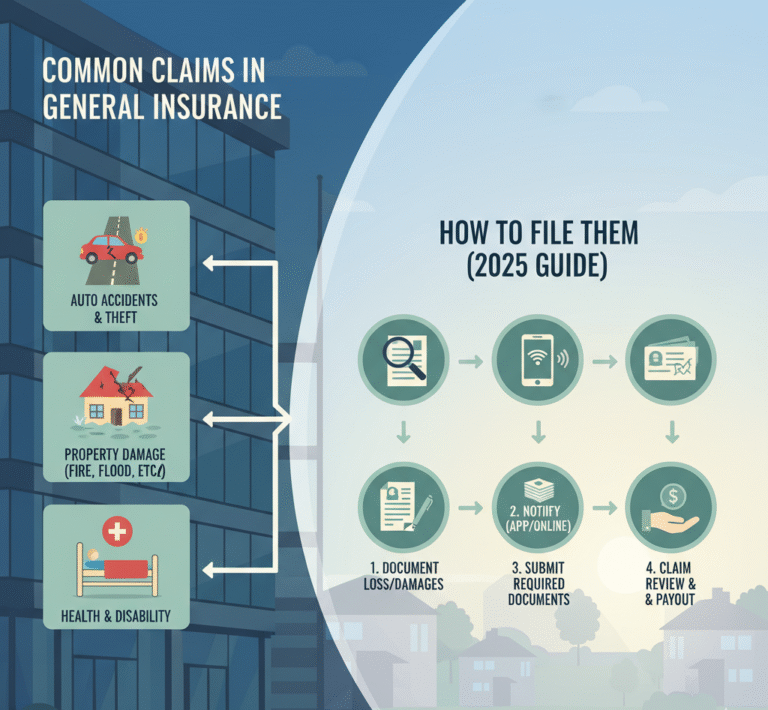
While every claim is unique, most claims follow several common stages:
1. Claim reporting / noticing the loss
- You report the loss (accident, damage, illness, death) to your insurer.
- You send first documents: claim form, photos, police report (if needed).
- The insurer acknowledges receipt.
According to one overview: “initial filing and acknowledgment usually take 1 to 3 days.” assurelio.com+2My Blog+2
2. Assessment / investigation
- The insurer checks your policy, verifies the loss, assesses damage, may send an adjuster, may require documentation from third parties (repair shops, hospitals, police).
- The time can vary hugely depending on complexity. One source says for property damage: “7 to 30 days” for normal cases. claimrite.co.uk+2Accounting Insights+2
3. Decision & settlement offer
- Once investigation is done, the insurer decides whether to accept and how much to pay. They make a settlement offer.
- If you accept, payment is processed.
- Typical timelines: for many claims, the decision may come within “30 to 45 days after receiving proof of loss.” Accounting Insights+1
4. Payment & closure
- After you accept, insurer issues payment (check, bank transfer) or arranges repair / replacement.
- Some guidelines say once agreement is reached, payment should be effected within 3 business days. Central Bank of Trinidad and Tobago
Typical timelines by claim type (in 2025)
Here are ballparks based on type and complexity:
| Claim type | Simple cases | Complex or disputed cases |
|---|---|---|
| Auto / motor damage (minor) | ~ 1 week to 3 weeks (if damage small, fault clear) inspek.ai+1 | 4-8+ weeks, possibly a few months if serious damage, injuries, or fault contested. Wexford Insurance Solutions+2Reddit+2 |
| Home/property damage | ~ 2-4 weeks for moderate damage Wexford Insurance Solutions+1 | Several months to 12+ months if major disaster, rebuild needed, litigation. doi.sc.gov+1 |
| Health insurance (routine) | ~ 15-30 days for typical claims My Blog+1 | 2-3+ months when many providers involved, investigations required. Wexford Insurance Solutions |
| Life insurance (simple death claim) | Some cases claim paid in days to a few weeks if documents all good. canarahsbclife.com+1 | If fraud check, complex estate issues: months. Insurance Institute of India |
Also in the UK, a recent article: for UK car insurance claims the average property damage claim in 2023 took 353 days to settle. simplyquote.co.uk
Why some claims get delayed — the pain points
Understanding the causes helps you avoid or mitigate them.
● Documentation delays
If you don’t submit required forms, photos, repair estimates, police reports — insurer may wait. One guide says completeness of documents is key. inspek.ai
● Complexities in investigation
When there’s injury, multiple parties, severe damage, disputed fault, subrogation (insurers going after each other) — the process stretches. As one Reddit user put it:
“Months to years.” Reddit
And another:
“Adjuster has 115-400 files… they put some on diary for 30-90 days.” Reddit
● Repair / rebuild backlog
Especially for property damage: parts unavailability, contractor delays, rebuild time all add up. The UK example noted longer repair lead-times. simplyquote.co.uk
● Legal/regulatory procedures
Some jurisdictions require certain investigation windows. For example: in India for non‐health claims, rules may require insurers to complete investigations within 30 days and settle within 45 days after last document. Insurance Institute of India+1
● Fault or liability disputes
If it’s unclear who is at fault or multiple insurers involved, settlement waits until everything is sorted. One site says: “Most state laws say claims should be processed promptly but investigations can take longer.” progressive.com+1
● Human-resource & process constraints
Insurance carriers handle many claims; backlog and capacity matter. The academic paper shows delay builds due to processing capacity. arXiv
Real user pain:
- “I submitted a claim 4 weeks ago … told it will take 60 business days to process.” Reddit
- “It took 11 months from incident until a claim was closed.” Reddit
What you can do to speed things up
Here are practical actions to help your claim settle faster:
- Report quickly — The sooner you notify insurer, the sooner process begins.
- Submit full, accurate documentation immediately — Photos, repair bills, police reports, medical records. Incomplete info = delay.
- Be responsive — Answer insurer’s questions, make the vehicle available for inspection, engage repair shop or adjuster promptly.
- Know your policy & coverage — Understand what’s covered, what your deductible is, whether you need specific forms.
- Use trusted repair networks / approved shops if your policy allows “cashless” settlement and the shop is on insurer’s list. Could speed things up.
- Follow up regularly — Ask for claim number, adjuster contact, status. If silent for too long, escalate.
- Avoid major negotiations / disputes unless necessary — If you accept their estimate then repair, you speed up payment. If you push for more, expect longer timeline.
- Document all communications — You’ll have better evidence if you need to complain or escalate.
- Check local regulations — Some places mandate max time-limits for insurers; knowing them gives you leverage. For instance, Indian regulator mandates settlement within 45 days in many cases. Insurance Institute of India
When to worry: Red flags & escalation
You should start pushing or escalate when:
- The insurer hasn’t acknowledged your claim within a week or two, and you submitted everything.
- You repeatedly get generic “we’re reviewing” updates with no real progress. > Example: one user reported “Please wait another day… been dragging on” for a health claim. Reddit
- Your claim has been under investigation for much longer than typical for your type of claim.
- You haven’t received a settlement decision within the regulated timeframe (if applicable in your jurisdiction).
- You suspect insurer is delaying unduly — you may need to contact your insurer’s complaint unit, regulator or ombudsman.
Final take-away
In 2025, there is no one-size-fits-all answer to “how long will my insurance claim take?” But you can plan based on the typical timelines and expect the following:
- For straightforward claims (minor damage, clear liability, full docs) you could see settlement in 1 week to 3 weeks (auto) or 2-4 weeks (property) or 15–30 days (health).
- For complex claims (major damage, injury, rebuild, disputed fault) expect several months and sometimes 12 + months in major disasters.
- Your role: submit promptly, cooperate fully, keep track. The more you do your part, the faster it goes.
- If things drag far past typical windows, check your rights, regulations, and escalate.